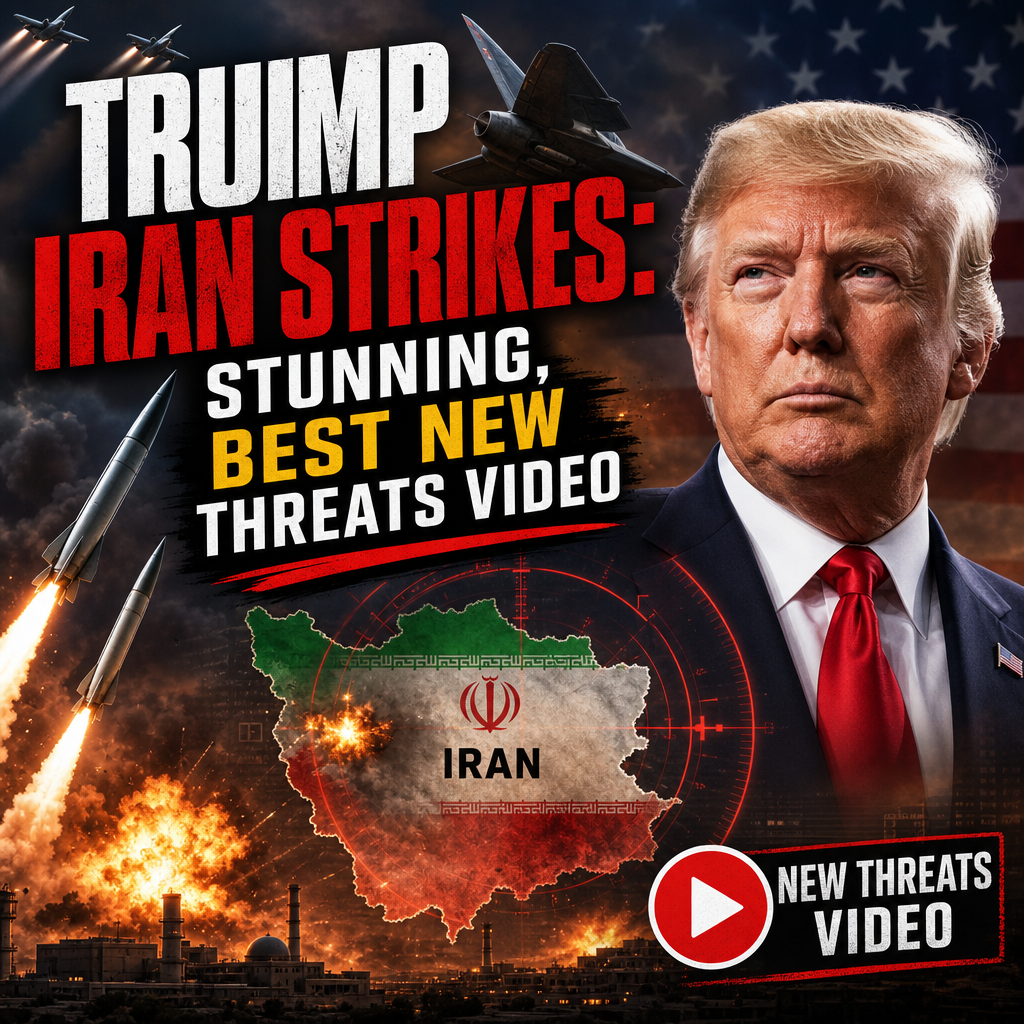
Trump Iran Strikes: Stunning, Best New Threats Video


Trump Iran Strikes have once again pushed the long-running U.S.-Iran confrontation back into the spotlight, this time through a wave of dramatic rhetoric, social-media style messaging, and sharply different interpretations from international outlets. What stands out is not just the threat itself, but the way it is being packaged: part warning, part political theater, and part signal to allies and adversaries alike.
The latest coverage shows a familiar pattern. One side frames the message as a hardline deterrent meant to project strength; another sees it as escalation that could deepen instability in a region already strained by war, proxy conflict, and fragile diplomacy. Taken together, the reports suggest that the story is less about a single video or statement than about how little room remains between posturing and real military risk.



Trump Iran Strikes and the politics of deterrence
From a U.S. political standpoint, threats directed at Iran have always served more than one purpose. They are aimed outward at Tehran, but also inward at domestic audiences that reward toughness on foreign policy. In that sense, the newest video or threat message fits a well-worn playbook: signal resolve, avoid appearing hesitant, and keep opponents guessing.
RT’s coverage tends to emphasize the confrontational dimension of the issue, often highlighting the possibility of new strikes and the broader logic of American pressure on Iran. That lens reflects a view that the U.S. is already committed to coercive diplomacy, where military threats function as leverage. It is a perspective that sees escalation as deliberate strategy rather than accident.




Sky News, by contrast, usually places these developments in the context of alliance politics, security risks, and the chance of wider regional fallout. That makes the threat feel less like a stand-alone political message and more like a move with consequences for shipping lanes, regional bases, energy markets, and civilian populations. In this framing, the danger is not merely that words sound aggressive, but that they can raise the odds of miscalculation.
Al Jazeera’s reporting generally adds another important layer: the Iranian view. From Tehran’s perspective, such warnings are rarely seen as isolated. They are interpreted as part of a broader U.S. campaign of pressure, sanctions, covert action, and military signaling. That helps explain why Iranian officials often respond by stressing sovereignty, deterrence, and resistance rather than compromise under threat.
What the rhetoric is really doing
The current messaging around Trump Iran Strikes appears to be doing at least four things at once:
– reinforcing a “strong leader” image for domestic politics
– warning Iran not to test U.S. red lines
– reassuring regional allies that Washington is still willing to act
– keeping strategic ambiguity alive, so Tehran cannot easily predict the next step
That ambiguity can be useful, but it is also risky. If the threat is too vague, it may look empty. If it is too specific, it can corner both sides and leave little space for de-escalation.
Why the threat matters beyond the headline
The biggest mistake in reading these stories is to treat them as a single-event drama. The Trump-Iran relationship is really a layered conflict built over years: the collapse of the nuclear deal, sanctions, retaliatory attacks, regional proxy wars, and competing claims about who escalated first. Any new strike warning lands inside that larger history.
That matters because each fresh round of rhetoric can normalize the idea of military action. Once threats become routine, they may stop deterring and start conditioning audiences to expect confrontation. At that point, a strike no longer feels unimaginable; it feels merely possible.
There is also a practical issue. In the Middle East, military signaling rarely stays contained. A threat aimed at Iran can affect:
– Iraqi militias and U.S. personnel in the region
– shipping security in the Gulf and Red Sea
– Israeli calculations about its own defense posture
– oil prices and market nerves far outside the region
This is why the same language can be read very differently depending on who is listening. For supporters, it sounds like strength. For critics, it sounds like risk without a clear endgame.
A fair reading of the sources
Looking across the coverage, there is no simple consensus that the threat is either purely bluster or necessarily the prelude to action. Instead, the reporting points to a shared reality: tension is high, the political incentives for tough talk are strong, and the margin for error is thin.
The contrast is mostly about emphasis. RT leans into confrontation and the possibility of military follow-through. Sky News highlights the geopolitical stakes and the unpredictability of escalation. Al Jazeera focuses more on how Iran and the wider region perceive U.S. pressure and how that shapes responses. Together, they paint a picture of a standoff in which every message has multiple audiences and every audience interprets the same message differently.
That is why the most responsible conclusion is not that a strike is inevitable, nor that the threat should be dismissed as empty. The more accurate reading is that these warnings are part of a larger contest in which perception is nearly as important as capability. In the absence of diplomacy, rhetoric becomes a weapon in its own right.
What remains uncertain is whether this latest wave of threats is meant to deter action, prepare public opinion, or quietly set the stage for something more serious. Until that becomes clearer, the safest assumption is that the region is not just hearing noise — it is hearing signals that could shape real decisions.